- The Brain Blooms Newsletter
- Posts
- Join Our Community!
Join Our Community!
Welcoming New Members to Our Community Advisory Board

Dr. Lana Ruvolo Grasser Winters aka "Dr. Ruvvy"
June 24, 2026
Our Ongoing Commitment to Community
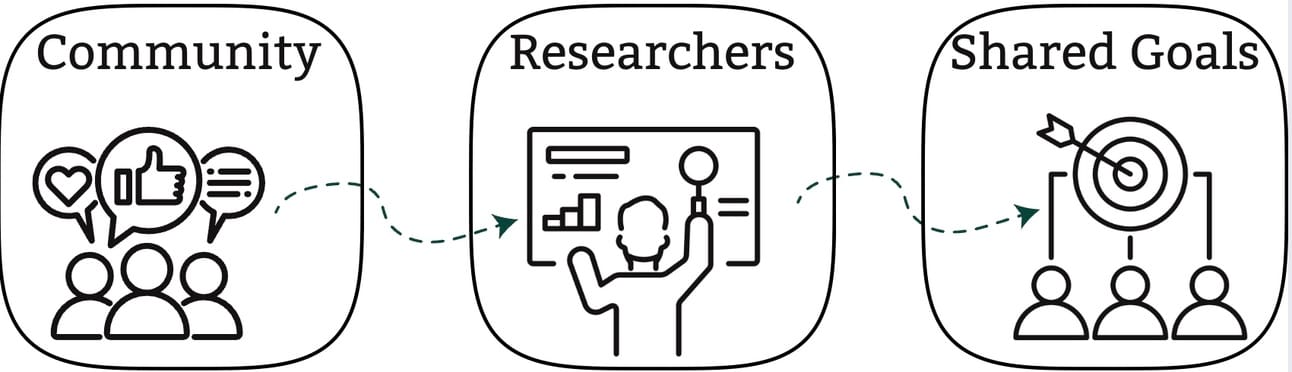
If you’ve been following this newsletter for a while, you may be familiar with our lab’s Community Advisory Board. You may also have heard us talk about Community-Based Participatory Research.
If you’re new here, WELCOME! We are grateful to have you. Be sure to check out the newsletters linked above to learn more about our initial efforts towards centering community in our research.
About Our Community Advisory Board (CAB)
Our CAB is currently composed of 6 individuals who each represent important stakeholders in our research: social workers and psychologists who care for youth, leaders of organizations that empower youth, and our next generation of leaders.
We meet on a quarterly basis to provide updates on our current studies, discuss new ideas, highlight wins and challenges in our communities, and encourage feedback to make sure our research is guided by the most pressing needs and wants of our stakeholders—that is, youth and the people who care for/about youth. These meetings mean so much to us because they remind us why we do this work: to truly reflect and uplift the voices in our community!
What Our CAB Has Achieved
Our CAB contributed to the design and refinement of our Detroit Health Survey study. The Detroit Health Survey aims to understand local trends in community health, how our communities have become resilient, and the challenges many face day to day. Based on CAB-identified priority areas, we are pursuing research on the role of air pollution on health, and health inequities. We have submitted grant applications to extend this line of research. The CAB is currently reviewing plans for data analyses, to ensure that these are aligned with community priorities.
Our CAB has also helped us to expand and add new measures to our the BEAM Study, which uses functional neuroimaging, or fMRI, to explore how experiences shape the brain and youths’ emotions, and to our research on immigrants’ experiences in the U.S. We are so grateful to our CAB members for always showing up with honesty, care, and wisdom. Their voices help us make sure our research isn’t just data; it’s representative of real, lived experience. Thank you for being part of this journey with us.

Join Us in Learning and Growing Together!
We are excited to grow our CAB and welcome new members.
We are welcoming new members to our CAB who:
Can commit to quarterly lab meetings, scheduled at the convenience of CAB members’ availability
Typically scheduled on weekday evenings or weekend afternoons
Are enthusiastic to provide feedback on ongoing studies and co-design new studies about child brain development, mental health, and resilience
Represent youth
CAB members under age 18 are welcome to join, with permission from a parent/legal guardian
Represent people who care for youth
Parents, grandparents, guardians, siblings, and any caregivers are welcomed
Counselors, educators, physicians, and any clinicians who care for youth are welcomed
Coaches, community leaders, mentors, advisors, and any individuals who support and empower youth are welcomed
Does this opportunity resonate with you? Please email our director, Dr. Lana Ruvolo Grasser Winters, and our CAB director, Miracle Craft, at [email protected] and [email protected].
Not Sure and Want to Learn More?
Whether you’re a researcher, clinician, or community member looking to get involved in this line of work, the University of Michigan Community-Based Participatory Research self-paced online course is a great resource! This resource is available for FREE; if you are looking for continuing education credit (CEs), there is also a paid version of the course that offers CE credit.

The Greenhouse of the Mind:
Resources to Help You Bloom

Help Support Science Content & Communication
Our team is so excited to get the word out to the people we serve and inform for FREE … and your support will allow us to put more resources and energy into doing precisely that.
Your donations help fund the creation of content that translates our research into practice.
Consider supporting our outreach efforts: