- The Brain Blooms Newsletter
- Posts
- Happy Black History Month!
Happy Black History Month!
Celebrating African American Excellence in Science
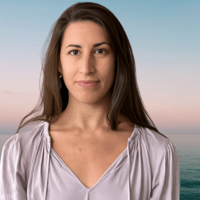
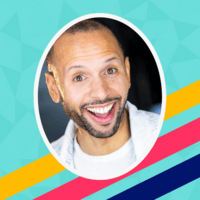
Dr. Lana Ruvolo Grasser Winters aka "Dr. Ruvvy" & Edmund Alyn Jones
February 04, 2026

AFRICAN AMERICAN EXCELLENCE IN NEUROSCIENCE & NEUROLOGY
Happy Black History Month!
All of us at the lab are so excited to celebrate diversity here in America and on our team. We literally have people from all over the world working to make progress in neuroscience for youth. In this newsletter, we provide some history through a description of the Pan-African flag and a celebration of Black pioneers in neuroscience and neurology.
The Pan-African Flag
Hopefully you’ve noticed that our thumbnail for this week’s newsletter has a distinct look. It is inspired by the flag created by the Universal Negro Improvement Association and African Communities League (UNIA-ACL) and Marcus Garvey in response to racism against Black individuals in 1920. The colors have tremendous significance. Red is the color of the blood shed for liberty; black for the noble people; and green for vegetation found in the Motherland.

Pan-African Flag Designed by Marcus Garvey
Dr. Solomon Carter Fuller (1872-1953)
Recognized as the first African American psychiatrist, Dr Solomon Carter Fuller is responsible for much of our understanding about Alzheimer’s disease (the devastating memory condition). Thanks to Dr. Fuller’s translations of pivotal work on the disease into English and his comprehensive review of the disease he made two major discoveries that helped neurologists see it as a physical condition.
The American Psychiatric Association named their award for Black mental health professionals in his honor. Moreover, the Dr. Solomon Carter Fuller Health Center in Boston bears his name.

Dr. Solomon Carter Fuller in his lab (Courtesy of New York Public Library)
Dr. Audrey S. Penn (b. 1934)
Dr. Penn was the first Black woman to serve as a director of an Institute at the National Institutes of Health—she served as deputy director of the National Institute of Neurological Disorders and Stroke (NINDS) and remains an inspiring role model to many women physician-scientists to this day.
She’s an emeritus professor, neurologist and physician!

Dr. Audrey Shields Penn, MD, PhD
If you are interested in science and medicine, then do it. It’s not going to be easy. But there is a lot of exciting research out there to be done, and with many opportunities in all areas of science and medicine. You just have to get out there and learn about it.
Dr. Alexa Canady (b. 1950)
Of course, we cannot forget Michigan’s own Dr. Alexa Canady. Dr. Canady was the first African American woman to become a neurosurgeon, in 1981. She served as chief of neurosurgery at Michigan Children’s Hospital from 1987 through her retirement in 2001. During her career, she saved the lives of thousands of patients, most of whom were under the age of 10, who faced illness, gunshot wounds, head trauma, and other brain injuries or diseases.
Dr. Canady was inducted into the Michigan Women’s Hall of Fame for her contributions to science.

Learn about these Pioneers in Neurology & Neuroscience and more!
Greenhouse of the Mind:
Resources to Help You Bloom!

Shiver on the River: Belle Isle Winter Birding ❄️
Join Detroit Bird Alliance for a guided winter birding trip around Belle Isle. 🗓 Feb 7 | 9 AM–12 PM
📍Belle Isle Nature Center, Detroit, MI
For Tickets & info: https://tinyurl.com/4vze3y3u

Join us for Brain Day in Detroit on March 14, 2026, from 11 AM–4 PM at the Michigan Science Center (5020 John R St, Detroit, MI 48202)! Hosted by WSU neuroscientists, this fun, family-friendly event includes hands-on activities, cool brain displays, creative crafts, and a chance to meet and chat with real scientists. Get your tickets at www.mi-sci.org or call (313) 577-8400.
Support Brain Day
Brain Day at the Michigan Science Center is right around the corner.
We are raising funds to support youths’ attendance of Brain Day at the Michigan Science Center on Saturday, March 14th.
For $23 you can support a young person’s admission to go learn all about how their brains work.
Who knows, we might just inspire the next generation of world-class scientists.
Please donate through our “Buy Me a Coffee” page below:
