- The Brain Blooms Newsletter
- Posts
- Exploring Our Big Emotions
Exploring Our Big Emotions
With our friends from the 100 Acre Woods


Ira Gattu & Ujala Janjua
May 13, 2026
In today’s newsletter, we journey to the 100 Acre Woods described in the Winnie-the-Pooh books by A.A. Milne. Here, friendships bloom between Pooh, Piglet, Eeyore, Tigger, Rabbit, Owl, and Chirstopher Robin. Imagination runs wild as they adventure and learn together!
These characters also remind us of something very real in our own world: our big emotions.
The characters in Winnie-the-Pooh each experience the world and their big emotions in unique ways—just like us!
Some are curious, some are nervous, some are full of energy, and some express their emotions quietly. Together, they show us that what we feel and how we express it can look different for everyone.
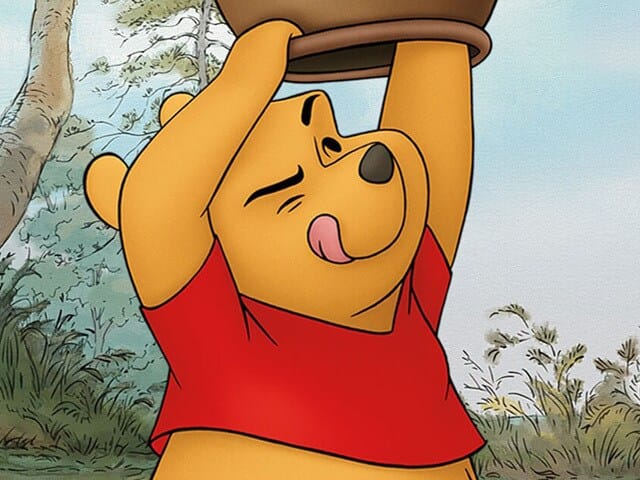
Pooh and Joy
Winnie-the-Pooh reminds us of the importance of enjoying small, everyday moments. Pooh shows us that joy can often be found anywhere we open our eyes to it, including in sweet treats—like his honey—but also in friendships—like with his best friend Piglet!
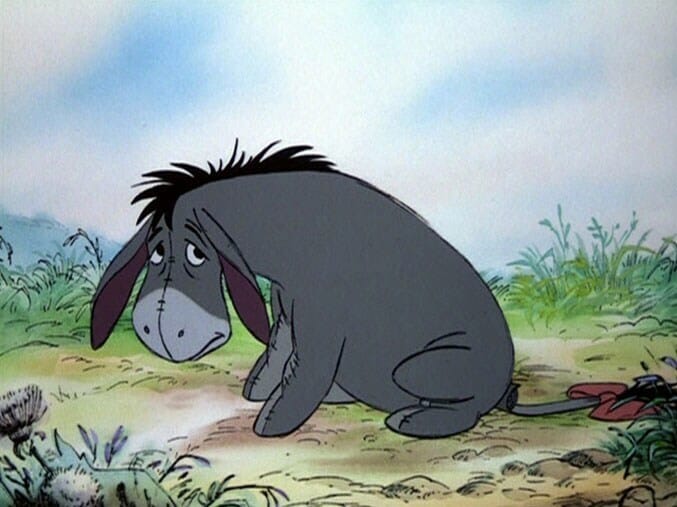
Eeyore and Sadness
Eeyore’s emotions are often more quietly expressed. Having low energy, feeling sad, or feeling disconnected from others are not uncommon feelings, but they sometimes can go unnoticed. His emotions may be quieter than others', but they are still important.
Sometimes, we may not have the words to explain how we feel when we experience emotions like Eeyore’s. This friend reminds us that these feelings are real and they are not uncommon. When we are surrounded by friends like those in the 100 Acre Woods, we can find comfort in trusting communication. If you are feeling sad or lonely, know that you are not alone and help is available to you. Talk to someone you love, or call/text 988.
Pay attention to the quiet feelings in yourself and your loved ones—noticing when someone is tired or losing interest in things that used to bring them joy could be an opportunity to start a supportive conversation.
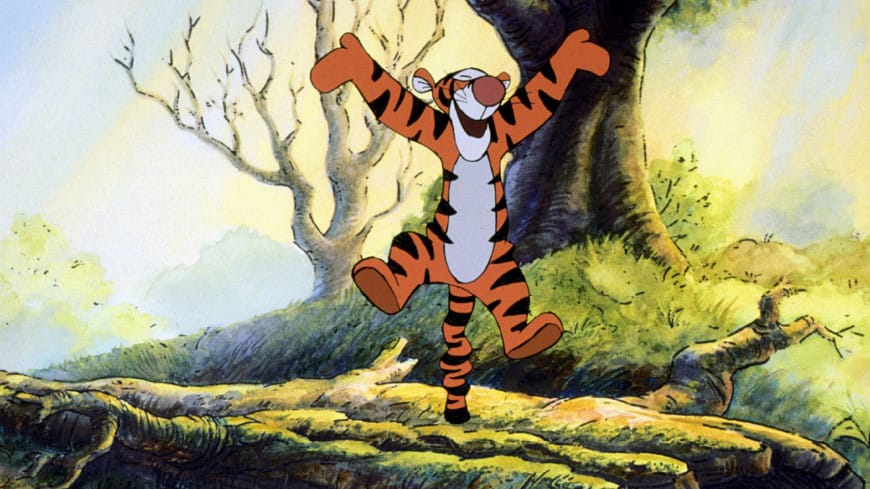
Tigger and Excitement
Tigger is a bundle of energy! He reminds us that big emotions are not always sad or scary. Big emotions can also look like excitement, happiness, and silliness.
Sometimes, it can be hard for us to calm down when we are feeling really excited. Taking a few deep breaths and focusing on a mindful activity, like coloring or practicing an instrument, can help us to slow down and enjoy these happy feelings.
The Importance of Big Emotions
We all have different thoughts and feelings. The 100 Acre Woods helps readers to explore and learn through Pooh and his friends that no emotion is bad, wrong, or misplaced.
Emotions are a part of our self-expression as humans and our way to communicate what we feel inside. Emotions aren’t always alarm bells; rather they are bits of information. When we feel these big emotions, our brains and nervous systems are working hard to respond to the world around us and helping us learn. Curious to learn more? Check out this article on understanding and supporting kids’ big emotions!
At the Ruvvy Resilience Lab, we are interested in learning how children’s positive and negative experiences can affect their thoughts, feelings, and big emotions as well as shape brain structure and function.
Our Brains, Experiences, and Mental Health study will help researchers better understand and support children’s mental health in the future. Interested, have questions, or want to find out if you're eligible? Please contact the study team at [email protected] or call/text 313-380-1777.
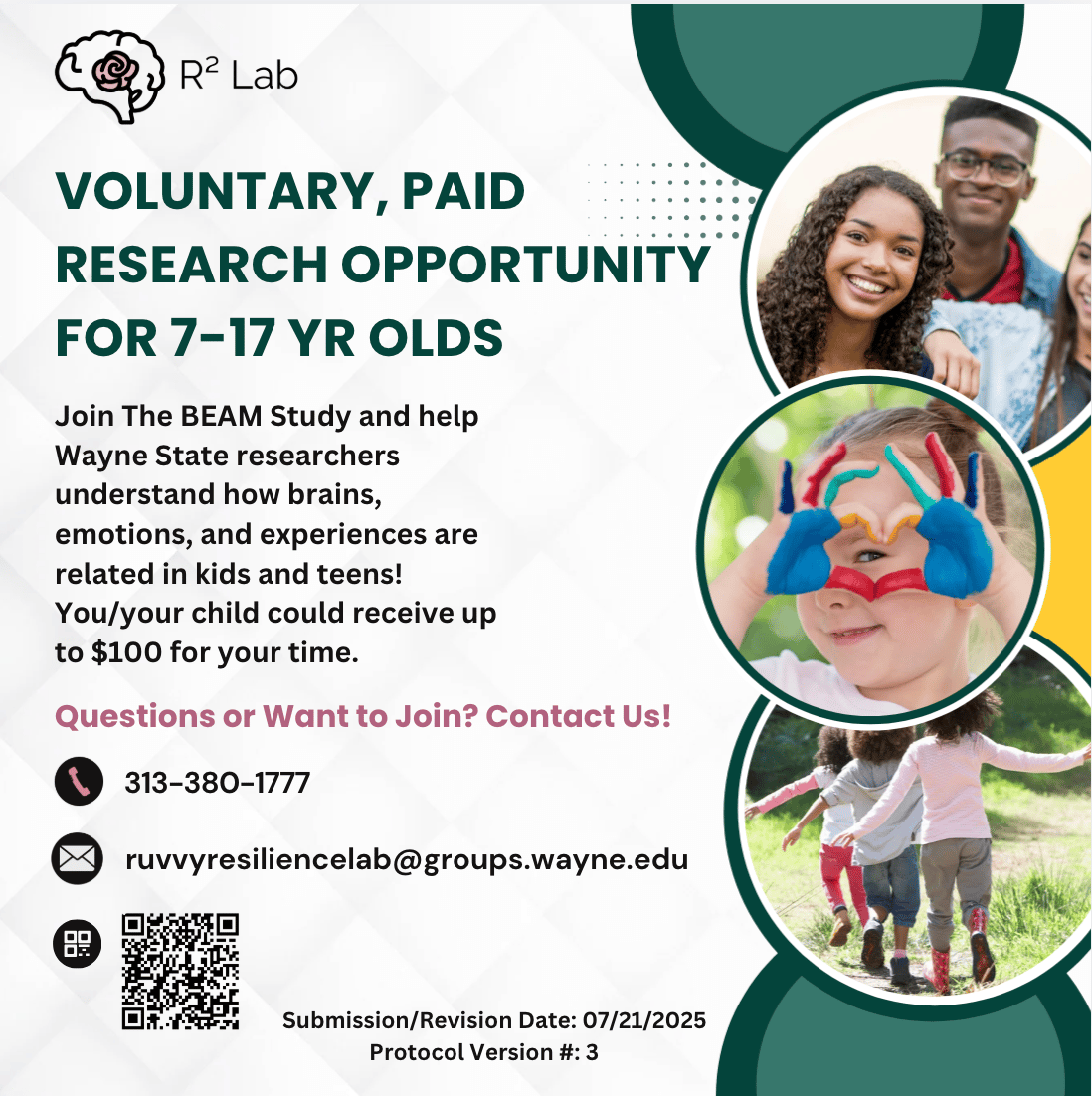
We are seeking child and adolescent (7-17) participants to complete two days of interviewing and brain scanning to help us learn more about how experiences, emotions, and brain development are related to one another.
Each session will take about 2-3 hours and will occur approximately one month apart. Participants will be paid $50 for each visit (up to $100) and will also receive a 3D print of their brain!
Email us at [email protected] or call/text 313-380-1777 to get started.
The Greenhouse of the Mind:
Resources to Help You Bloom


Help Support Science Content & Communication
Our team is so excited to get the word out to the people we serve and inform for FREE … and your support will allow us to put more resources and energy into doing precisely that.
Your donations help fund the creation of content that translates our research into practice.
Consider supporting our outreach efforts: